
TLV Bible
Tree of Life Bible SocietyBooks & Reference
4.5168.00 Reviews
- Version
- 4.3.2
- Installs
- 50.00K
- Age Rating
- Everyone
Screenshots
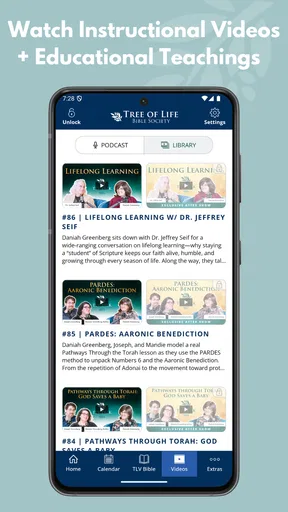
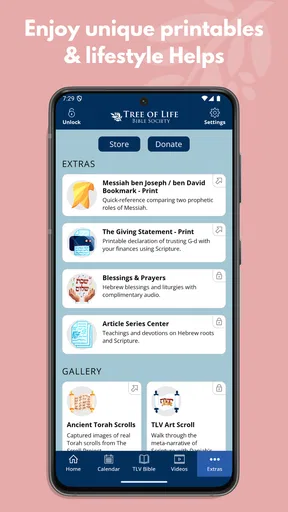
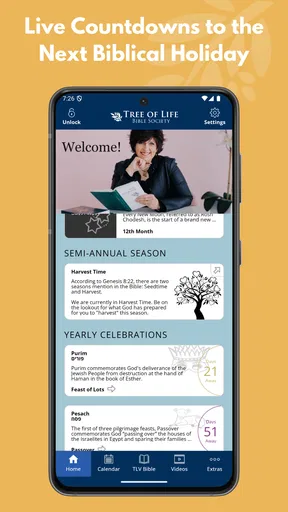
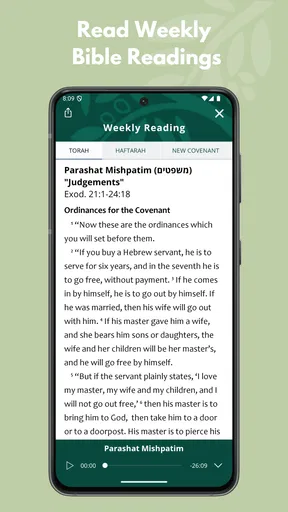
Our Review of TLV Bible
 Analysis by Appyee
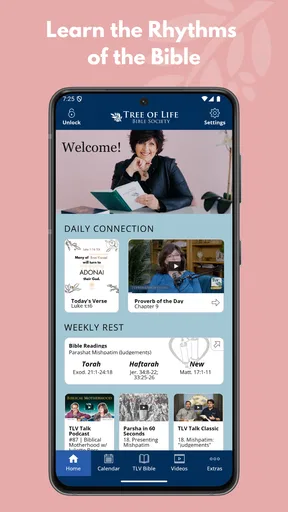
I approached TLV Bible as a reading and reference app rather than as a general-purpose study suite. Developed by Tree of Life Bible Society, it is built around the Tree of Life Version and its aim of presenting Scripture through Jewish eyes. That focus gives it a clear identity: this is for readers who want the biblical text and its Jewish context to remain visible while they read on a phone or tablet.
The app sits in the Books & Reference category, and the basic download is free. It is rated for Everyone, so it is suitable for a broad audience, including families and readers who are simply exploring a different Bible translation. The current release is version 4.3.2, and it runs on Android 7.0 or later. In practical terms, that makes it accessible on many older Android devices rather than limiting it to recent hardware.
What makes the experience worth considering is not the idea of having a Bible on a phone by itself. There are countless alternatives for that. The more specific appeal is the TLV translation and the perspective behind it. If you are curious about how Jewish terminology, names, and cultural framing affect the way Scripture reads, this app offers a direct way to spend time with that approach instead of treating it as a footnote.
How the free access and paid value fit together
The application is free to download, which makes trying it a low-risk decision. The listing also includes in-app purchases ranging from $5.99 to $49.99 per item. I would therefore separate the decision into two questions: whether the free experience suits your reading habits, and whether any optional purchase offers enough extra value for the way you intend to use the app.
That distinction matters because a free Bible app can already meet the needs of someone who wants occasional reading, a passage at church, or a convenient way to compare wording during personal study. Paying only makes sense when the additional material or functionality fits a regular workflow. I would not purchase anything immediately. I would first read several familiar passages, check how comfortable the presentation feels, and decide whether the app is becoming part of my routine.
The price range should also be viewed as a range of possible purchases rather than as a single required subscription cost. The app can be installed without paying, while the available paid items occupy different price points. For a reader who only needs the Bible text, that free entry point is the strongest part of the value proposition. For a committed student, the higher end deserves more scrutiny because the benefit must justify spending considerably more than a casual reader would need.
I appreciate that this structure lets people investigate the translation before making a financial commitment. It is especially useful if you are unfamiliar with the TLV and do not yet know whether its vocabulary and Jewish framing will improve your reading or slow you down. A purchase should follow a genuine need, not curiosity alone.
A translation with a distinct reading experience
The central value is the Tree of Life Version itself. In my experience, a translation becomes more useful when it gives me a reason to return to it, and the TLV’s Jewish orientation supplies that reason. It encourages me to pay attention to names, expressions, and cultural references that can feel flattened in a more familiar English Bible.
This does not mean it will automatically replace every other translation. I would use it as a primary text if its voice feels natural to you, but I would keep another Bible nearby when a passage seems unclear or when I want to compare translation choices. That is not a weakness unique to this app; it is a sensible habit whenever a reader studies a translation with a particular interpretive and linguistic character.
The app is most compelling for readers who want Scripture through Jewish eyes without having to begin with a separate academic resource. It can serve as a bridge between ordinary devotional reading and more deliberate study. You can start with a familiar chapter, notice where the wording feels different, and then investigate why that difference matters.
Useful ways to make it part of a routine
A realistic everyday use case would be a short morning reading before work. I would choose one passage, read it once for continuity, then return to a few verses where the wording or names stand out. The important step is not rushing through a daily target. It is using the translation’s distinctive voice as a prompt to slow down and ask what assumptions I bring from other English Bibles.
Another good workflow is preparation for a discussion group. Rather than arriving with only a familiar translation in mind, I would read the same section in TLV Bible and mark the phrases that create a different emphasis. Even without turning the session into a technical study, that comparison can produce better questions and prevent the conversation from relying on one translation as though it were the only possible wording.
A third use is thematic reading. If I were following a theme across several books, I would keep a small note of recurring terms and names that feel especially significant in this version. The app becomes more valuable when it is used as a consistent lens over time, not merely opened for an isolated verse and forgotten.
The best practical tip is to test the translation with passages you already know well. Familiar chapters expose differences quickly. They also help you decide whether the TLV language feels illuminating, unfamiliar in a productive way, or simply less comfortable for your personal reading style.
Where it differs from ordinary Bible apps
Many Bible applications compete through breadth: numerous translations, elaborate study libraries, audio options, reading plans, community tools, or cross-device features. TLV Bible has a narrower reason to exist. Its appeal is not that it should replace every Bible resource on your device; it is that it gives focused access to a particular translation and perspective.
That focus can be an advantage. A crowded app may encourage constant switching between versions and tools, while this one invites you to stay with the TLV text. If your goal is to understand how this translation reads from beginning to end, a dedicated environment can feel less distracting than a large catalog.
On the other hand, readers who want a broad comparison platform may prefer a more established multi-translation Bible app. Someone preparing a detailed sermon, researching original-language terms, or managing extensive notes may also be better served by a specialist study tool. TLV Bible is not the obvious choice for every task, and its value should be judged by its distinctive purpose rather than by features associated with much larger Bible platforms.
Small frictions that affect the decision
The first friction is conceptual rather than technical: the Jewish framing may require adjustment. Readers accustomed to another translation can find the terminology refreshing, but they may also need time to become comfortable with names and expressions that are less familiar in everyday church reading. I would not treat that learning curve as a flaw, but it does mean the app is not equally effortless for everyone.
The second issue is the presence of paid items. Free access makes experimentation easy, yet the purchase range means the full value depends on what you choose to buy and how often you use it. A person looking for a completely free, feature-rich study environment should examine the app carefully before spending. The free starting point is attractive, but it should not be confused with unlimited paid value.
The third trade-off is specialization. A focused translation app can be more coherent than a huge Bible library, but it may not satisfy someone who wants every version, extensive scholarly tools, or a single application for all religious reading. I would keep expectations realistic: this is a strong candidate for TLV-centered reading, not a universal replacement for every reference resource.
Older Android support is helpful, especially if you are using a device that cannot run the newest applications. Still, the minimum operating-system requirement is worth checking before installation. Readers on iOS should also confirm availability and compatibility through the relevant official store before planning their setup, since the Android version details do not automatically describe every platform experience.
Who is likely to get the most from it?
I would recommend it first to Christians and Bible readers who specifically want the Tree of Life Version in a convenient mobile format. It is also a good fit for people studying the Jewish background of Christianity, readers comparing translations, and anyone who feels that familiar English wording sometimes hides cultural texture.
It can be useful for a small group with mixed backgrounds. One person might read from a traditional translation, another from TLV, and the group can discuss how each rendering shapes the passage. That kind of use does not require everyone to adopt the same version. In fact, the app is most valuable when it opens a respectful comparison rather than ending the conversation.
New readers may appreciate the free entry point because they can explore without committing money first. I would suggest beginning with a Gospel, a well-known Psalm, or another familiar section rather than attempting an ambitious reading schedule immediately. Familiar material makes it easier to notice what the TLV is doing differently.
It is less suitable for someone who wants an all-in-one study workstation. If your priorities are a large translation library, intensive annotation, original-language research, or a broad collection of reference books, another category of Bible app will probably serve you better. It is also not the right pick if you strongly prefer the wording of one established translation and have no interest in comparing perspectives.
My approach before considering a purchase
I would use the free version in three stages. First, I would read a complete short book or several connected chapters to judge the overall rhythm. Second, I would revisit passages I know well and note whether the Jewish terminology adds clarity or creates too much interruption. Third, I would use it in a real situation, such as preparing for a group discussion or reading during a quiet morning, because an app can feel impressive in a quick test but awkward in a routine.
Only after those steps would I consider an in-app purchase. The question would be practical: does the paid material solve a problem I actually have? If I only want access to the TLV text, paying may not be necessary. If I am using the app consistently and a paid item supports deeper study, the expense may be easier to justify. Since purchases extend from a modest amount to a substantially higher one, I would be particularly careful at the upper end and avoid treating every optional item as essential.
The app’s average rating is 4.5 from around 579 ratings, with 168 written reviews, and it has passed 50K installs. Those figures suggest a real audience and generally positive reception, but they should not replace personal testing. A rating cannot tell you whether the translation’s style suits your theology, reading level, or study habits. The free download is the better evidence for that decision.
My verdict for readers deciding today
TLV Bible is worth trying if you want Scripture presented through Jewish eyes and prefer a focused translation experience over a giant toolbox. The free download removes much of the risk, and the Everyone rating makes it approachable for a wide range of readers. Tree of Life Bible Society has given the app a clear purpose, and that purpose is more meaningful than simply putting another Bible on a phone.
I would recommend starting free, reading familiar passages, and resisting the urge to pay before you know what you will use regularly. The optional purchases, priced from $5.99 to $49.99 per item, may offer value for committed readers, but the right choice depends on the role the app plays in your study. There is no reason to spend merely because paid content is available.
My final view is favorable but specific: choose this app for the TLV perspective, not because you expect it to replace every other Bible or reference tool. It offers the most value to curious, consistent readers who want to notice Jewish language and context in their everyday Scripture reading. If that is your goal, the free starting point makes it an easy recommendation. If you need a comprehensive research suite or a huge translation catalog, I would skip the purchase and use a broader alternative instead.
Verdict
Strengths of TLV Bible
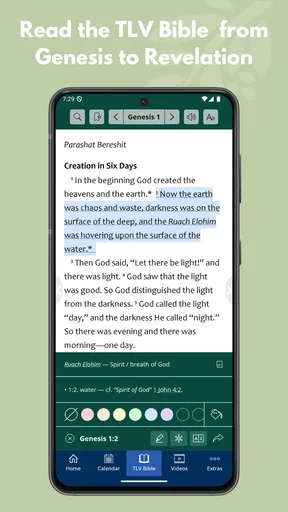
- Includes the complete Bible in the easy-to-read TLV translation.
- Jewish cultural context helps explain Hebrew terms and traditions.
- Search tools make it simple to find verses, books, and keywords.
- Audio Bible support can be useful for listening during commutes or study.
- Clean layout makes regular reading comfortable on mobile screens.
Limitations of TLV Bible
- The translation’s Messianic Jewish perspective may not suit every reader.
- Some features may require an internet connection or additional downloads.
- Audio availability and quality can vary between books or editions.
- Advanced study tools may feel limited compared with dedicated Bible apps.
- Ads or in-app purchase options may interrupt the reading experience.
Similar Picks in This Category
View All
Google Play Books & Audiobooks
Google LLC4.7

네이버 - NAVER
NAVER Corp.3.5

Wattpad - Read & Write Stories
Wattpad.com3.7

King James Bible - Verse+Audio
Ozion4.8

Bible Offline-KJV Holy Bible
Bíblia Offline4.9

Amazon Kindle: Reading App
Amazon Mobile LLC4.8
Frequently Asked Questions
What is the TLV Bible app?
The TLV Bible app provides access to the Tree of Life Version of the Bible, a translation that seeks to preserve the Jewish context, terminology, and cultural background of Scripture. It is designed for reading, searching, and personal study on a mobile device. Depending on the version available, users may also find navigation tools, bookmarks, notes, reading plans, or audio features.
Is the TLV Bible suitable for beginners?
Yes, the TLV Bible can be suitable for beginners, especially readers who want to understand the biblical text within its Jewish and historical setting. Some Hebrew terms and names may be unfamiliar at first, but these features can add useful context. New readers may benefit from starting with a familiar book, using the search function, and consulting study notes or additional resources when available.
Does the TLV Bible app work offline?
Offline access depends on the specific TLV Bible app and how its content is distributed. Some versions allow users to download Bible text for reading without an internet connection, while others may require connectivity for certain features, advertisements, audio, or additional resources. Before traveling or relying on the app without data, check its settings and test a downloaded passage in airplane mode.
Does the TLV Bible include audio, notes, or study tools?
The available tools can vary between TLV Bible applications, because different developers may offer different editions and features. Common options may include verse search, bookmarks, highlighting, personal notes, sharing, reading history, or audio playback. However, not every app includes all of these functions, and audio or advanced study materials may require an internet connection, an in-app purchase, or a separate download.
Is the TLV Bible app free to download and use?
Many TLV Bible apps can be downloaded at no initial cost, but the exact model depends on the publisher. A free version may include advertisements, optional purchases, or limited access to premium tools such as audio, advanced study content, or ad removal. Review the app-store listing, permissions, subscription details, and privacy information before installing so you know what is included.
